Vanessa Fernando, Karl Andrew Victa
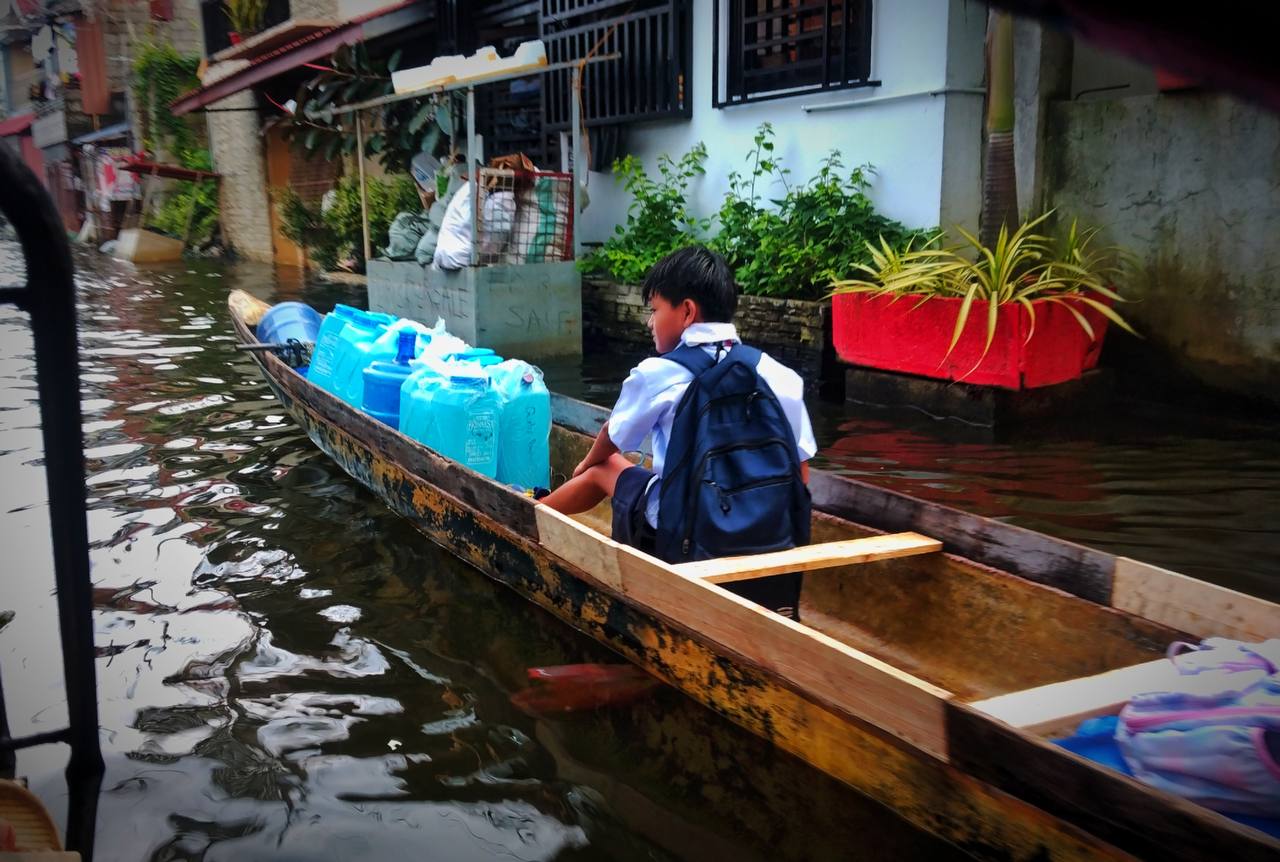
Boats are not an unusual mode of transportation in Northville 9—it's necessary. (Photo Courtesy: Ang Banyuhay)
When floodwaters rise in Barangay Iba O’ Este, Calumpit, Bulacan, Northville 9 Elementary School students already know what’s coming: no classes again.
Even with the sun shining and most schools open, Northville 9 often remains closed—not because of a storm, but because of the high tide, or worse, flood, which turns its streets and school grounds into shallow rivers.
Behind “No Classes”
Northville 9 sits in one of Calumpit’s lowest, most flood-prone pockets, wherein local and national coverage shows repeated inundation during the 2025 southwest monsoon, or habagat.
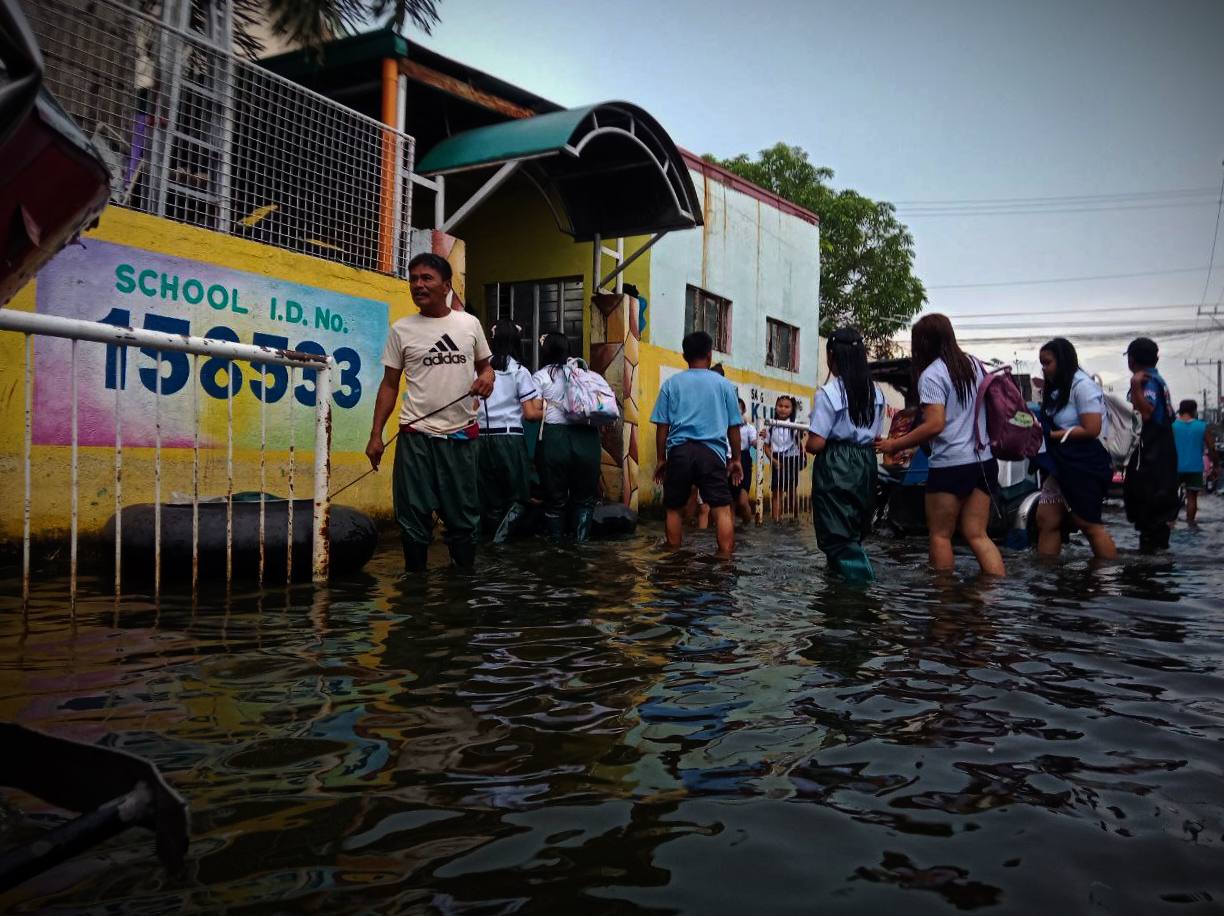
The elementary school is not always submerged, but the surrounding communities are. When water rises, hundreds of families are transferred to the school grounds for safety.
(Photo courtesy: Ang Banyuhay)
This evacuation approach, which the residents of Northville 9 did not want, highly affects the school's functionality and the students' learning.
High tide isn’t the real problem
Northville 9 Elementary School does not flood easily during ordinary high tide. Teachers say that the school grounds remain dry enough to hold classes even when nearby streets are wet. However, the situation changes completely once the river overflows and floodwater reaches waist-deep.
“Maraming walang kakayahan na bumili ng bota or jumpsuit. ‘Yung iba nagkakasakit na dahil stuck na yung water, wala na malabasan dahil barado na mga kanal at sinasabayan pa minsan ng high tide. ‘Yung iba nalumot na kalsada kaya nadudulas pagpasok kaya ‘di na nakakarating sa school, kaya umuuwi na lang,” one of its teachers, Mrs. Gaspar, lamented.
During Typhoon season, the school is often converted into an evacuation center for nearby residents who lost access to their homes. Classrooms, hallways, and the covered court shelter families, until the flooding subsides.
Students therefore must shift to modular or online learning as the school becomes a temporary shelter.
Learning takes a backseat
Teachers admit that this setup is far from ideal, explaining: “Nagkakaroon ng Alternative Delivery Mode or ADM. Either synchronous or asynchronous learning modalities.”
Parents on the other hand, worry that this may disrupt their children’s education.
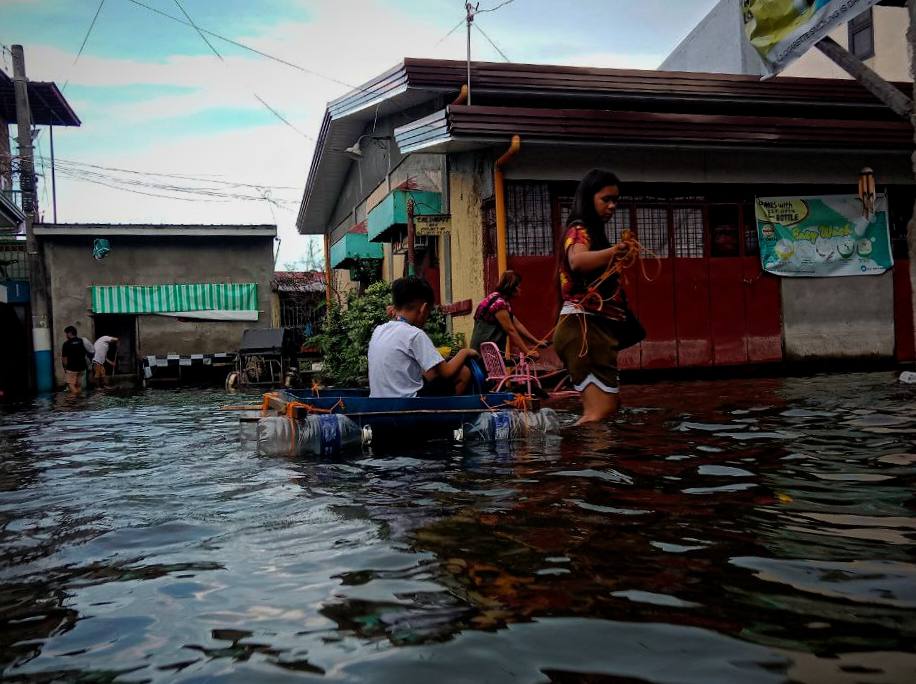
“Tuwing bumabaha, parang automatic na wala na naman silang pasok. Kawawa ‘yung mga bata lalo na ‘yung walang sundo kapag papasok. Kailangan nilang lumusong sa baha. Hindi na nga makapagsuot ng black shoes, naka-slippers o bota na lang para lang makapasok.” said Gemma Nabong, a mother from Northville 9 Elementary School.
This long-term problem calls for a long-term solution, especially since the affected elements are not just the residents and the present, but also the children and their future.
(Photo courtesy: Ang Banyuhay)
In these circumstances, Mrs. Gaspar places her hopes in the students’ parents, saying, “Sana kahit nasa ganitong sitwasyon sila ay magbigay, ang mga magulang, ng oras sa kanilang mga mga anak na hindi mahinto ang edukasyon. Para sa kanilang mga anak. Tulungan kaming mga guro na ipamulat sa kanila ang kahalagahan ng edukasyon.”
Without any other alternative from the Local Government Unit (LGU), the school remains occupied more often by evacuees than students.
With the absence of better evacuation areas, flood and tide control measures, and help and understanding from the community and the government, Northville 9 may eventually be submerged by its waters.