Isaiah Pangan
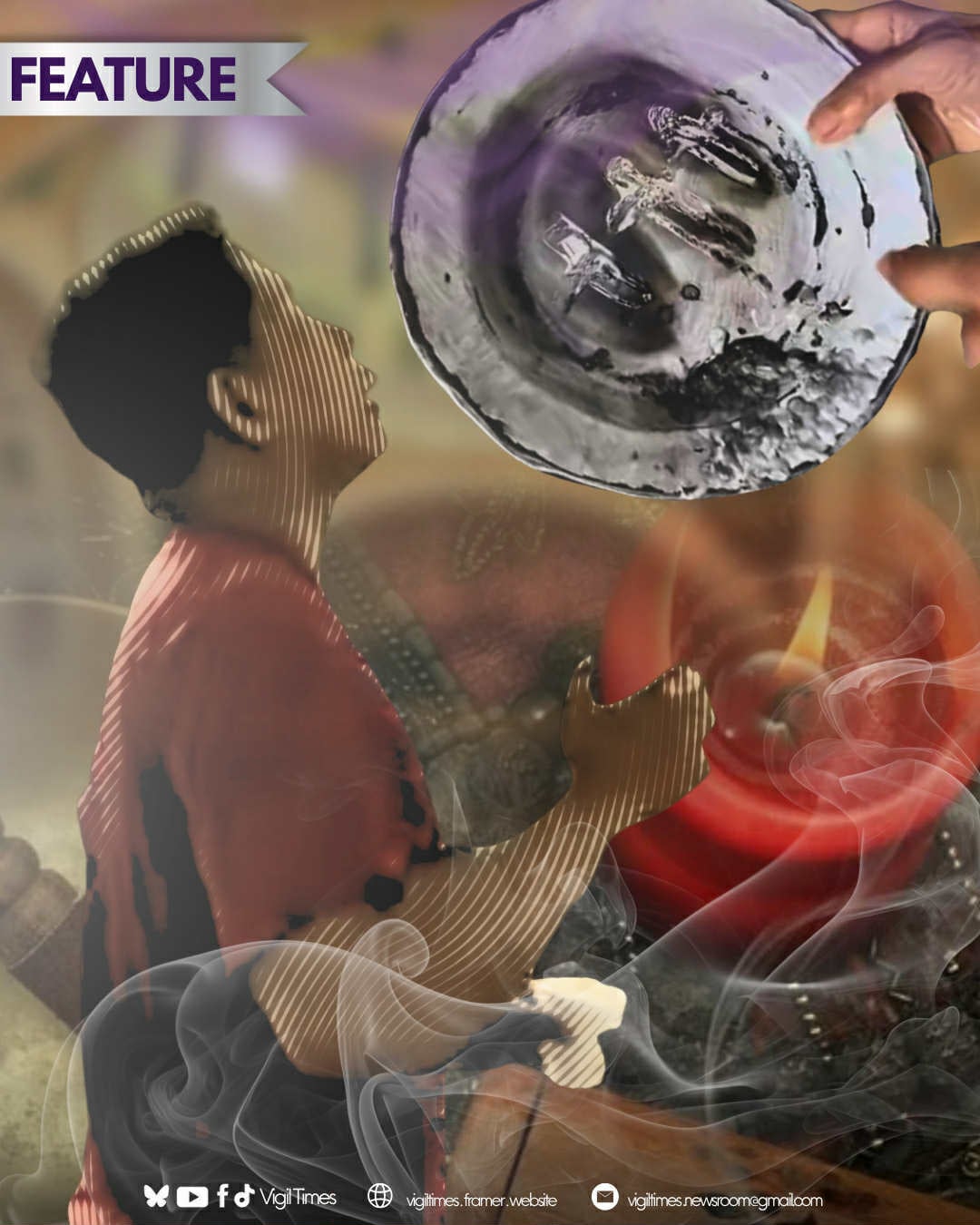
In the Philippines, stories of healing and faith have long walked side by side. From the provinces to the closeted part of the city, there remain people who seek cure not from clinics, but from candles, prayers, and unseen grace. These faith healers are often misunderstood—albularyo, manghihilot, espiritista—men and women who work within the margins, passed down in hushed conversations.
Among them is Arjin Gallanosa, a 23-year-old from Malabon City, whose path toward healing began in an unexpected way. He wasn’t born into a family of healers, nor did he inherit any sacred practice. His calling started with a dream—and later found himself drowning in curse.
“Way back 2017, nanaginip ako na may ginagamot akong pasyente. Hindi ko maintindihan ‘yung mga dasal na binibigkas ko,” Arjin recalls. Years later, in 2024, that dream took on new meaning when he found himself struck by what is known as “kulam”—witchcraft. After his own healing, something within him changed, “Nung nagamot ako, doon ko nasimulan kausapin ang Diyos, tinanong ko kung puwede akong maglingkod sa kaniya. Inaral ko s’ya,”
Since then, Arjin took this as a chance to concentrate his life on healing through prayer. He believes that his role is not to cure but to serve, as he believes that he is only an instrument and God is the one that truly heals people.
Each healing begins with prayer and discernment. He claims to sense whether an illness is rooted in the body or in the unseen. “Mostly talaga ng mga nagpapagamot sa’kin ay may mga kulam—kulam sa tao, kulam sa hindi nakikita. Hindi porket sinabing kulam, kulam agad sa tao. Ang mga hindi nakikita, naglalagay din ‘yan ng kung ano-ano sa katawan ng tao. Puwede silang maglagay ng tinik ng halaman, tinik ng isda o something—mga bagay na galing sa nature,” he shares.
For Arjin, this is not superstition but spiritual work—confronting pain that cannot be diagnosed and offering peace that cannot be prescribed.
When Arjin’s calling started, he doubted himself, “Actually noong una akong gumanap, ‘di ko maipaliwanag. May isa akong nagamot na hindi nakakalakad—napatayo ko siya, wala nang saklay. Dati, nagdududa pa ako sa kakayahan ko, pero ngayon, malinaw na sa isip ko na kaya kong makapagligtas ng taong nasa bingit ng kamatayan,” he admitted.
That is the moment that strengthened his faith but also placed him in the center of skepticism. Many people dismissed faith healers like him as “false prophets” or even demonic—yet even as Arjin have faced such criticism, he will always remind others that even the Bible speaks of honoring healers whose power comes from God.
For him, doubt from others is simply part of the calling, “Natural na ‘yan sa aming mga faith healers. Maraming nagsasabi na peke kami na ginagamit lang namin ang Diyos. Pero samin kasi, mataas ang pananampalataya namin sa Diyos,” he says.
Today, Arjin continues to serve those who come to him—the hopeless, the desperate, and the ones who have nowhere else to turn. To each of them, he offers not just healing, but faith, “'Yung pananampalataya, paniniwala, at pananalig—’yan ang gamot. Walang imposible sa Diyos.” he concluded.
It is such an irony that even the curse meant to break him became the very path that led him to his purpose—a reminder that sometimes, the ones who once suffered the most become the ones chosen to be gifted.