Andrea Nicole Regacho
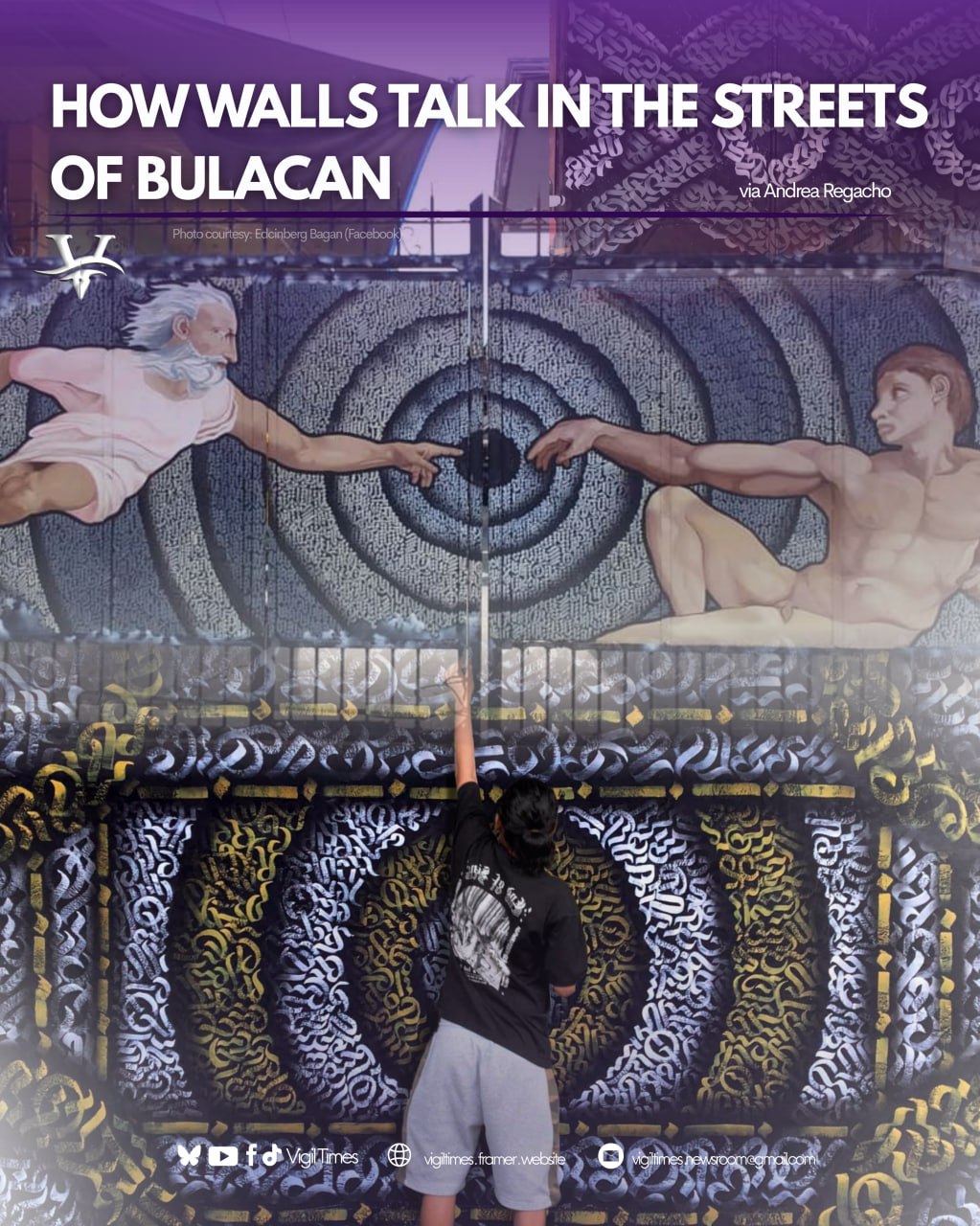
Courtesy of Edcinberg Bagan.
Murals have become a language of their own—vibrant stories painted across the walls of cities, the plain concrete turned into galleries of thoughts, emotion, and souls expressed in strokes.
Among the artists shaping this movement is Edcinberg Bagan, a 28-year-old calligraphy and mural artist from Plaridel, Bulacan, whose work transforms words into visual poetry.
What began as moments shared with friends who painted for the joy of it, evolved into something deeper—their passion stirred in him to create, let the colours speak, as he had seen them do it.
Calligraffiti
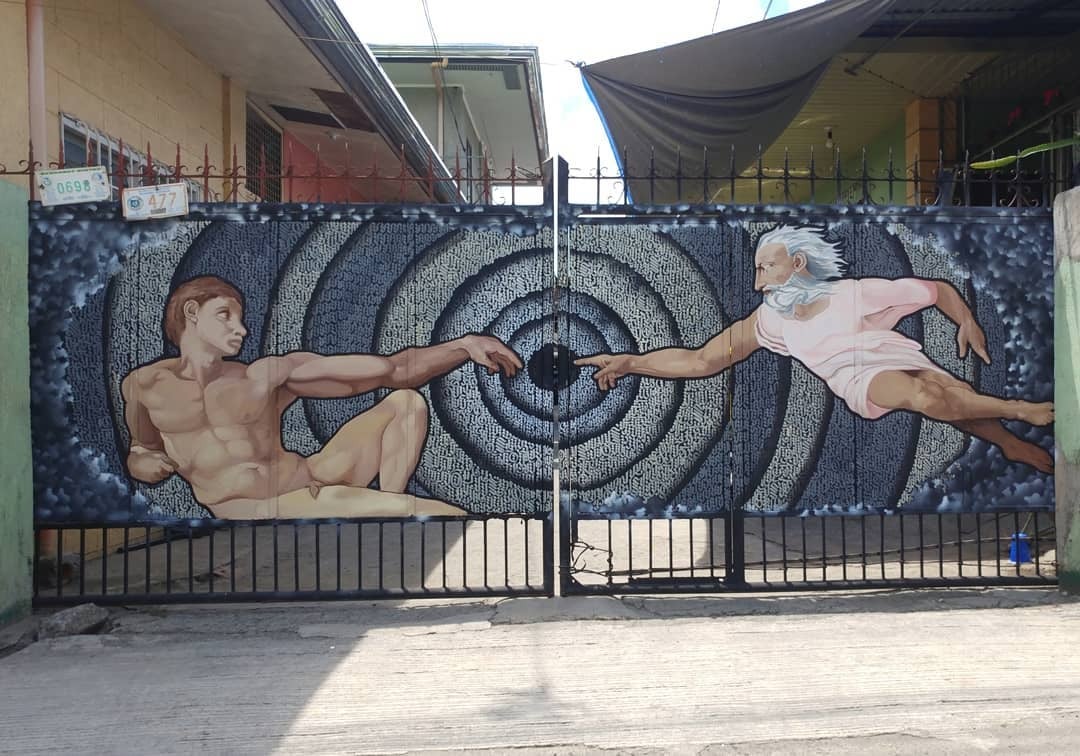
His first creation wasn't painted on a canvas, but on their family compound’s gate. Inspired by The Creation of Adam, he combined the classical imagery with his distinctive calligraphy.
“Our gate had long been bare and boring, so I decided to bring it to life with some art,” he shared. The simple act of creativity transformed an ordinary gate into an opening for his milestone, and a beginning of his calligraffiti journey.
Edcinberg described his art as calligraphy meeting graffiti, or calligraffiti. At times, his works carry no words, yet every symbol holds different meanings—shapes and images that when you look closely and try to understand, reveal faces, eyes, and fragments of stories craving for understanding.
His inspiration surged after his first time attending an art exhibit, where a calligraphy piece captivated his eyes and soul. Since then, he developed his own symbolic art system, crafting forms that may appear abstract at first glance, but reveal hidden messages through thorough inspection.
Throughout his journey, he found inspiration through collaboration. He had worked with other Bulacan artists like Jom Navarro, and Eyss, who he first started collaborating with through Sining sa Hardin at Mini Forest, Malolos. These partnerships show the heart of Bulacan’s creative community—where each artist shares their own stories on a collective creation.
Binding misconceptions
Though murals and graffiti receive growing appreciation, Bagan acknowledges the misconceptions they receive in this artform.
He shared that some still mistake mural and graffiti art for vandalism, unaware of the intention and respect behind it. “We always make sure to ask permission,” he added.
In 2019, four members of Panday Sining, an activist art collective group, were arrested in Manila after painting protest messages on public walls. Their work was meant to call for attention to social issues, and the authorities had seen it as vandalism.
“Showing what's happening around us through large murals easily catches attention,” he added. “It's easier to catch attention when you show awareness to issues.”
Art and awareness
Bagan ensures that each mural reflects its surroundings. His works often mirror the mood of the community—sometimes subtle, but always thoughtful and meaningful.
“Some people see words forming in my calligraphy,” he shared. “In that way, the audience can see what they want to see and that gives the piece their own meaning.”
From his home-made sharpened bamboo stick for drawing, to the broad walls of Bulacan, Edcinberg Bagan continues to refine how walls communicate—with every line, curvy or straight, being part of a greater conversation. His murals don't just exist; they speak.